Watering the Tomatoes
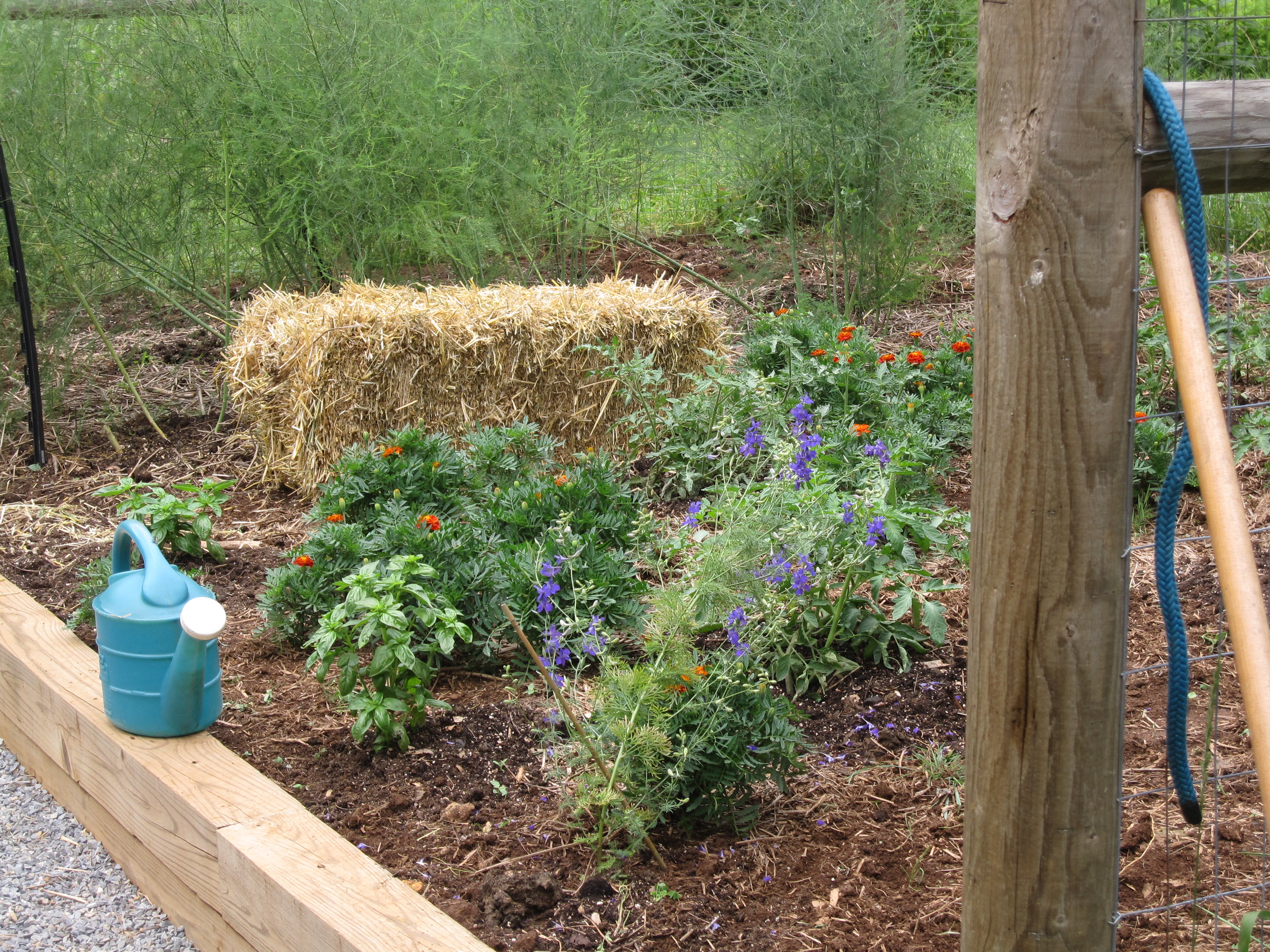
How wonderful to be here when the bats begin to feed,
Lightening bugs among the basil,
 The sky a tender screed.
Not a breath is stirring,
Though the earth exhales her ease.
The insect chorus rising,
A peaceful summer’s eve.
Watering the Tomatoes
How wonderful to be here when the bats begin to feed,
Lightening bugs among the basil,
 The sky a tender screed.
Not a breath is stirring,
Though the earth exhales her ease.
The insect chorus rising,
A peaceful summer’s eve.
Everybody knows trouble’s the best diet and it makes for a good late garden, too. A family emergency this spring re-sorted our priorities like a deck of cards and we came to appreciate the garden more deeply as vast areas endure even more than usual benign neglect.
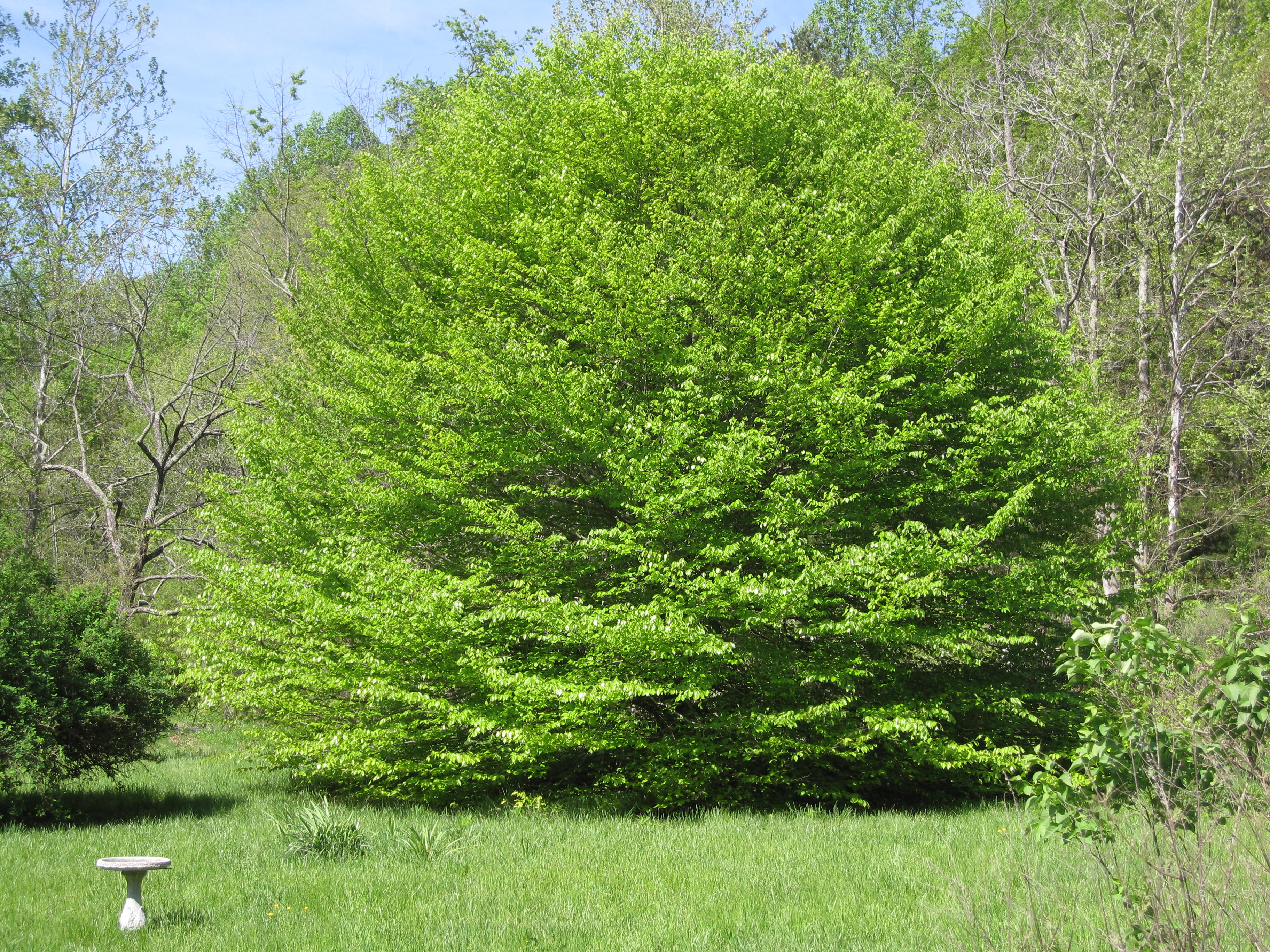
It has been a season of triage (all gardeners love a good war analogy), where you have to prioritize what’s worth saving. A close cutting of the outer garden is the first to go, somehow making the perfectly round dark green beech brood behind the flowering grasses in a way it never would on a mowed lawn.
This is the first summer our beloved American beech, Fagus grandifolia, planted from a woodland seedling a dozen years ago, has born nuts, just a few sprays here and there. I have seen old trees covered in nuts, a boon to wildlife – the great specimen in the courtyard at Dumbarton Oaks in Washington, D. C. and a lovely spindly one that rained down nuts on greenhouse panes at a private estate.
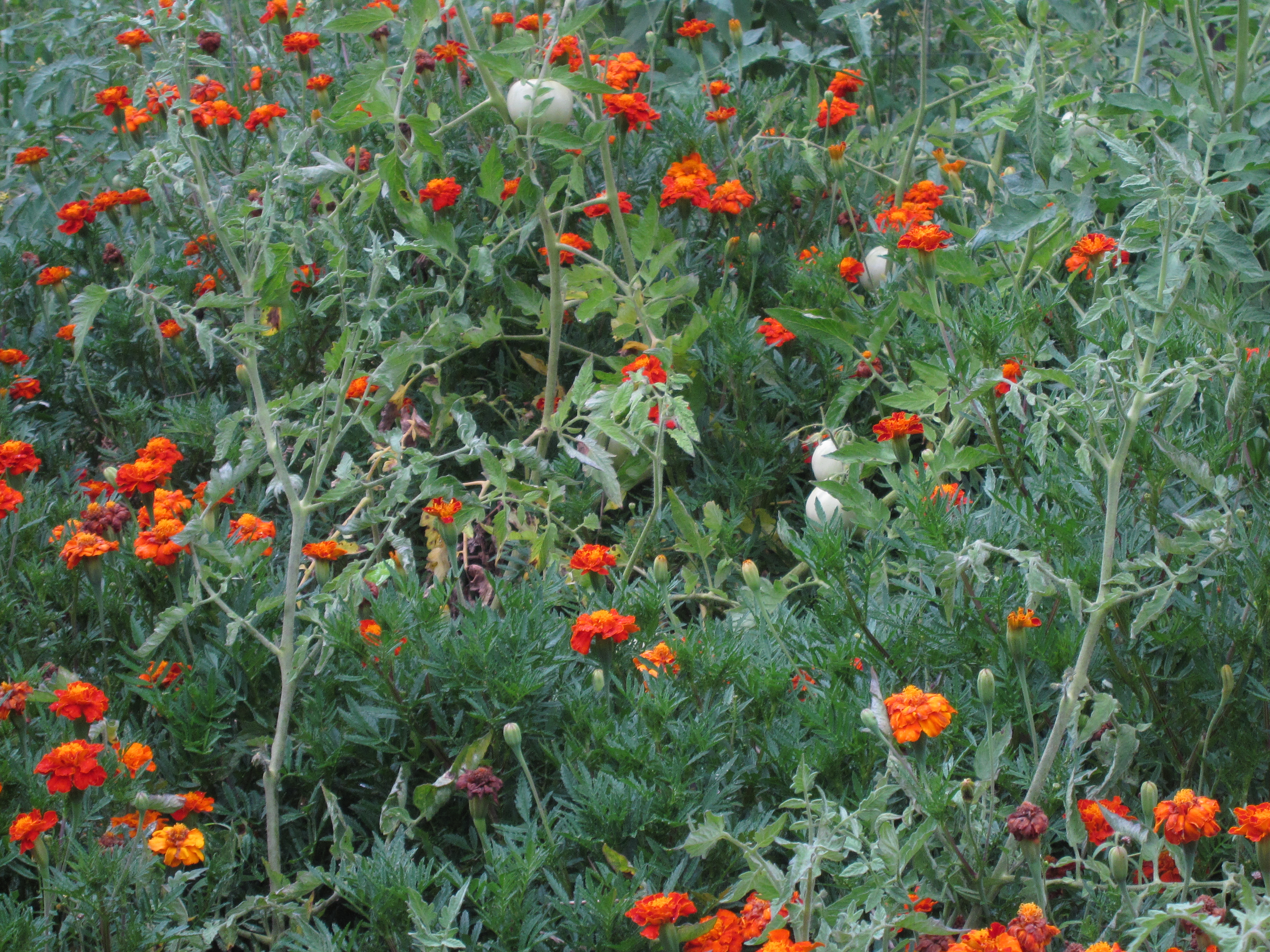
The winged sunflower is overtaking some of the outer beds, and mugwort is fighting with Tartarian asters in the perennial border. But the Regale lilies got dead-headed just in time to keep them from dissipating energy on seeds and the idea that we could get the essential summer garden in – tomatoes, basil and peppers – before the solstice was an encouragement outside our particular troubles.
We push against it a little at a time and still can walk among the beds in the evening and derive comfort.
Why is that?
The earth gives sustenance. Lilies and milkweed bloom and swarm with pollinators. Even in an overgrown patch, dill and sorrel are there for the taking regardless of anything but the tilt of the planet and the warmth of the soil.
We see life come from death every day in the garden and this is our reward for getting out there and trying no matter what.
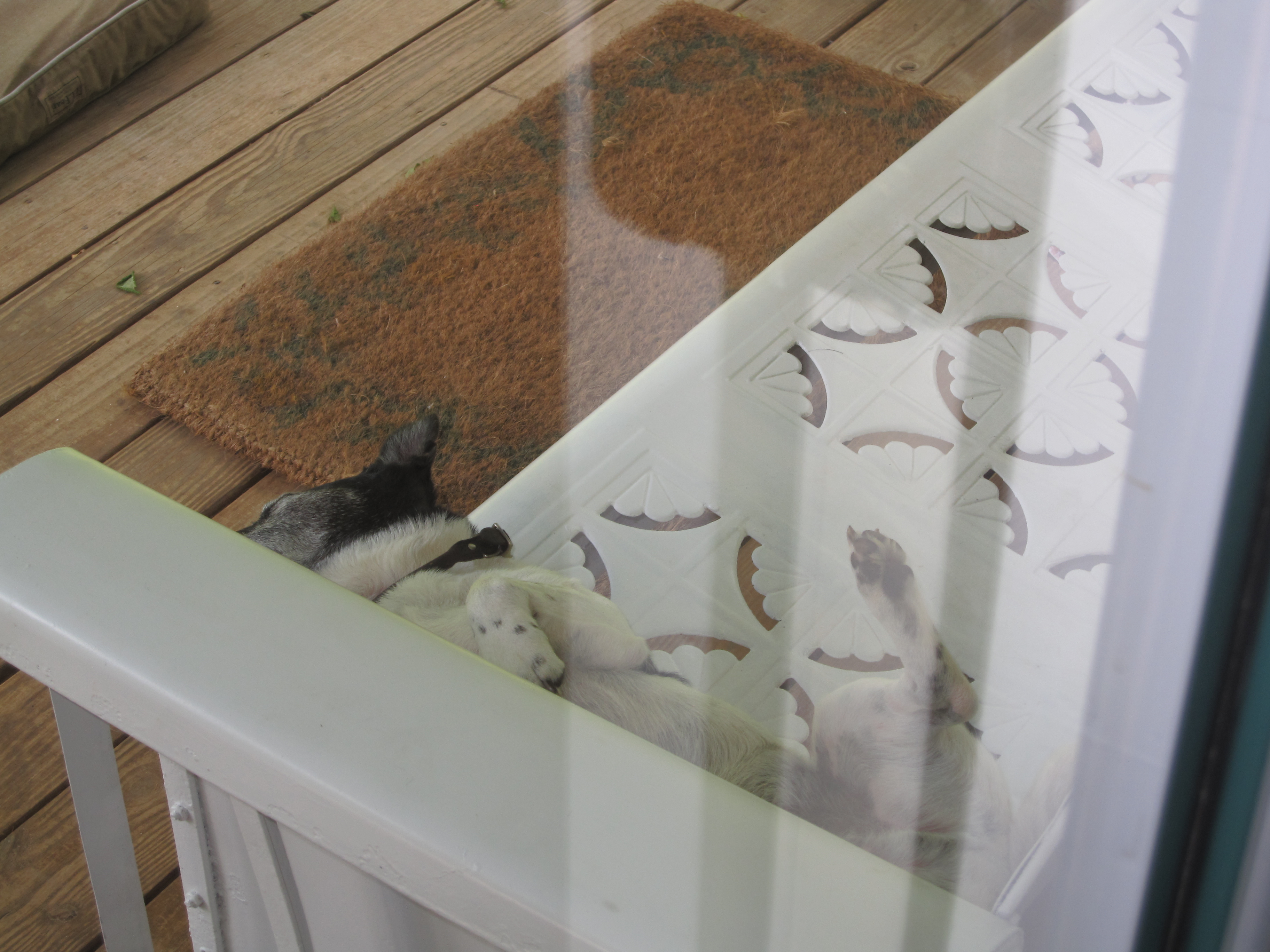
It’s been a long, cool spring, but Memorial Day has unfolded like a lush, ripe flower and Milo is beginning to enjoy cooling afternoons on the glider. Of course the equinox won’t come for another few weeks, but this sure looks like summer to me.
We Thank God we are together with our family this holiday weekend with a roof over our heads and plenty to eat and our hearts and prayers go out to all people who cannot say the same, especially our countrymen who have suffered historic floods and tornadoes in the last weeks.
And we honor all who have died and suffered in the defense of our country.
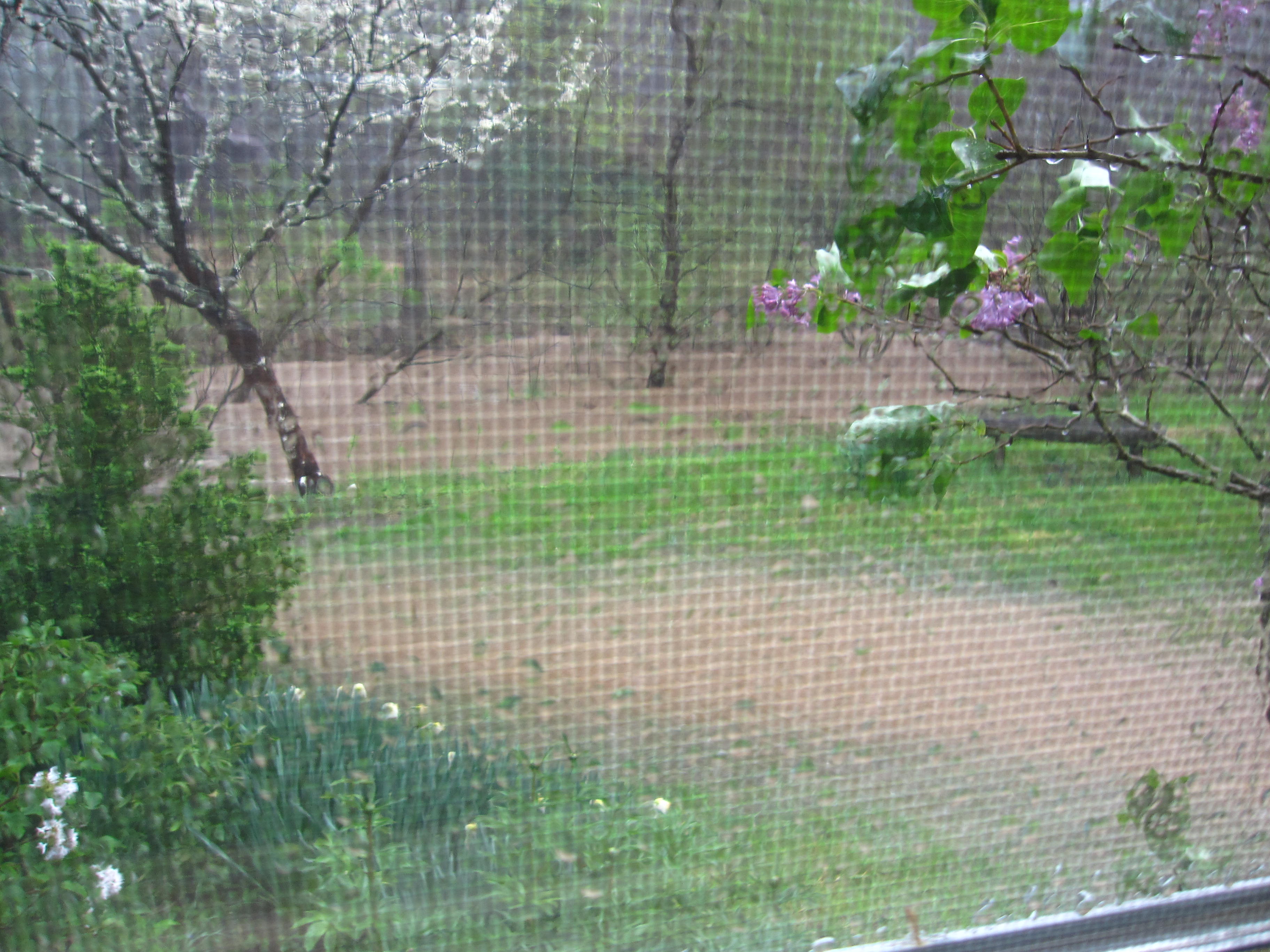
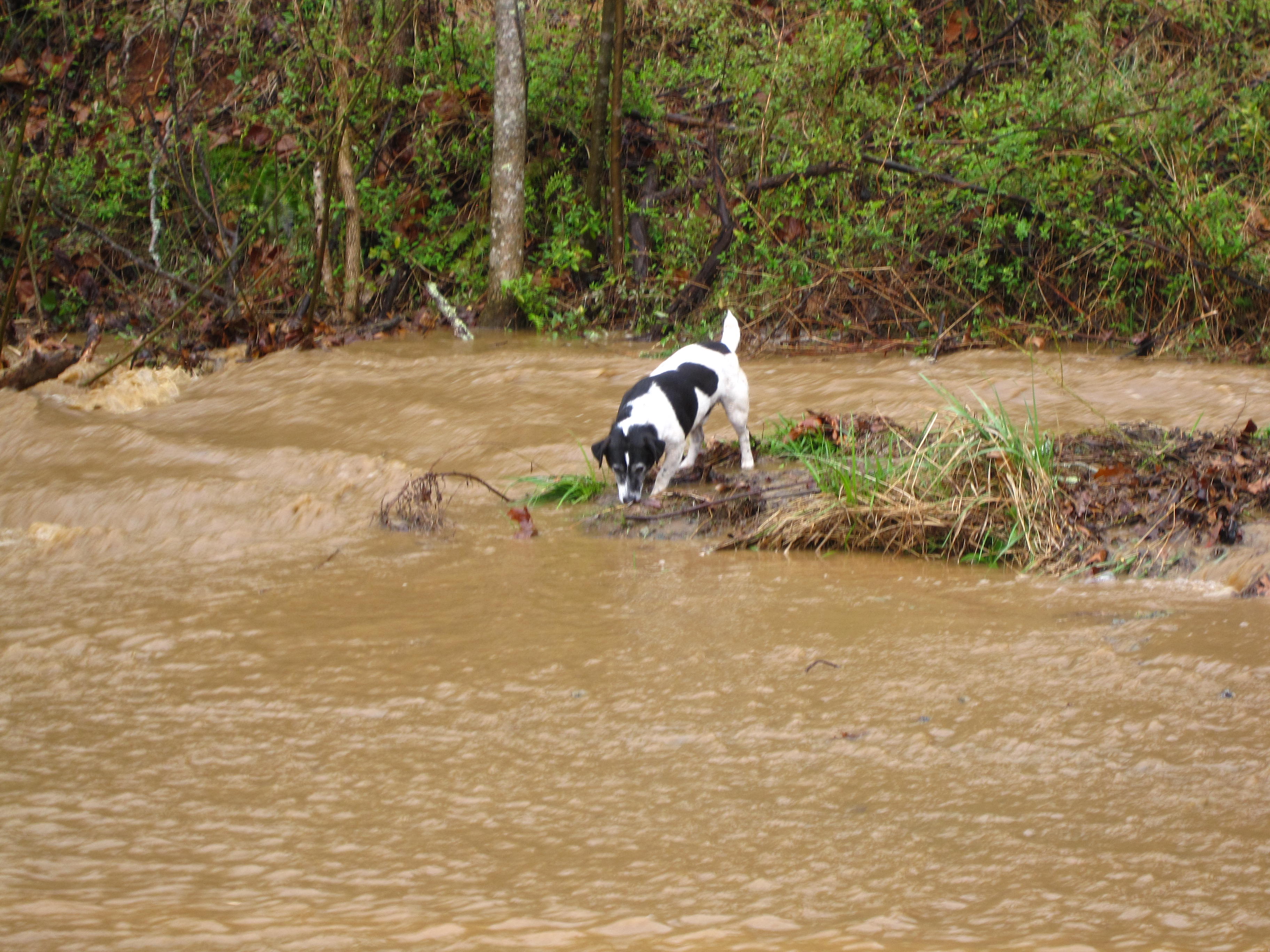
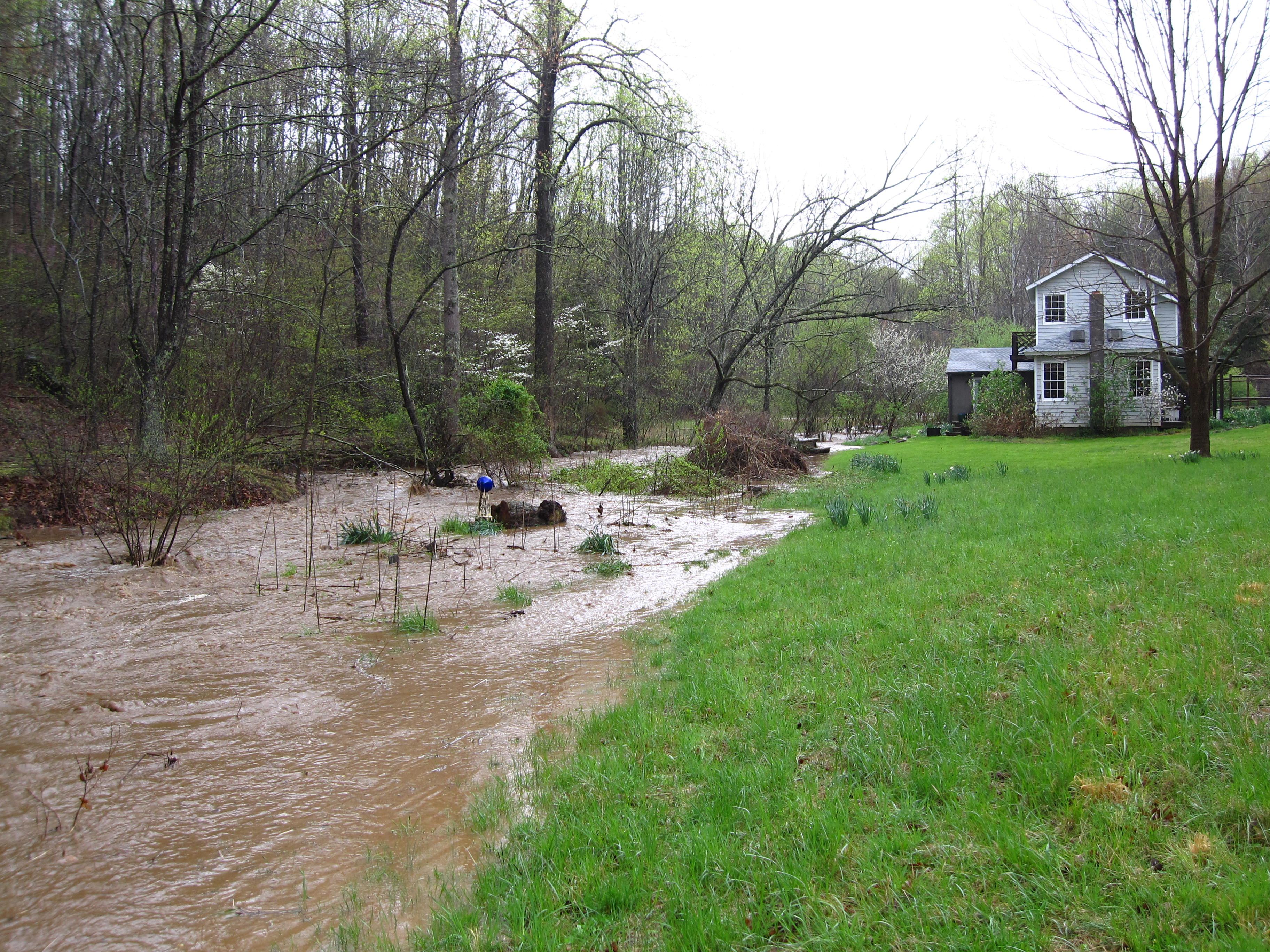
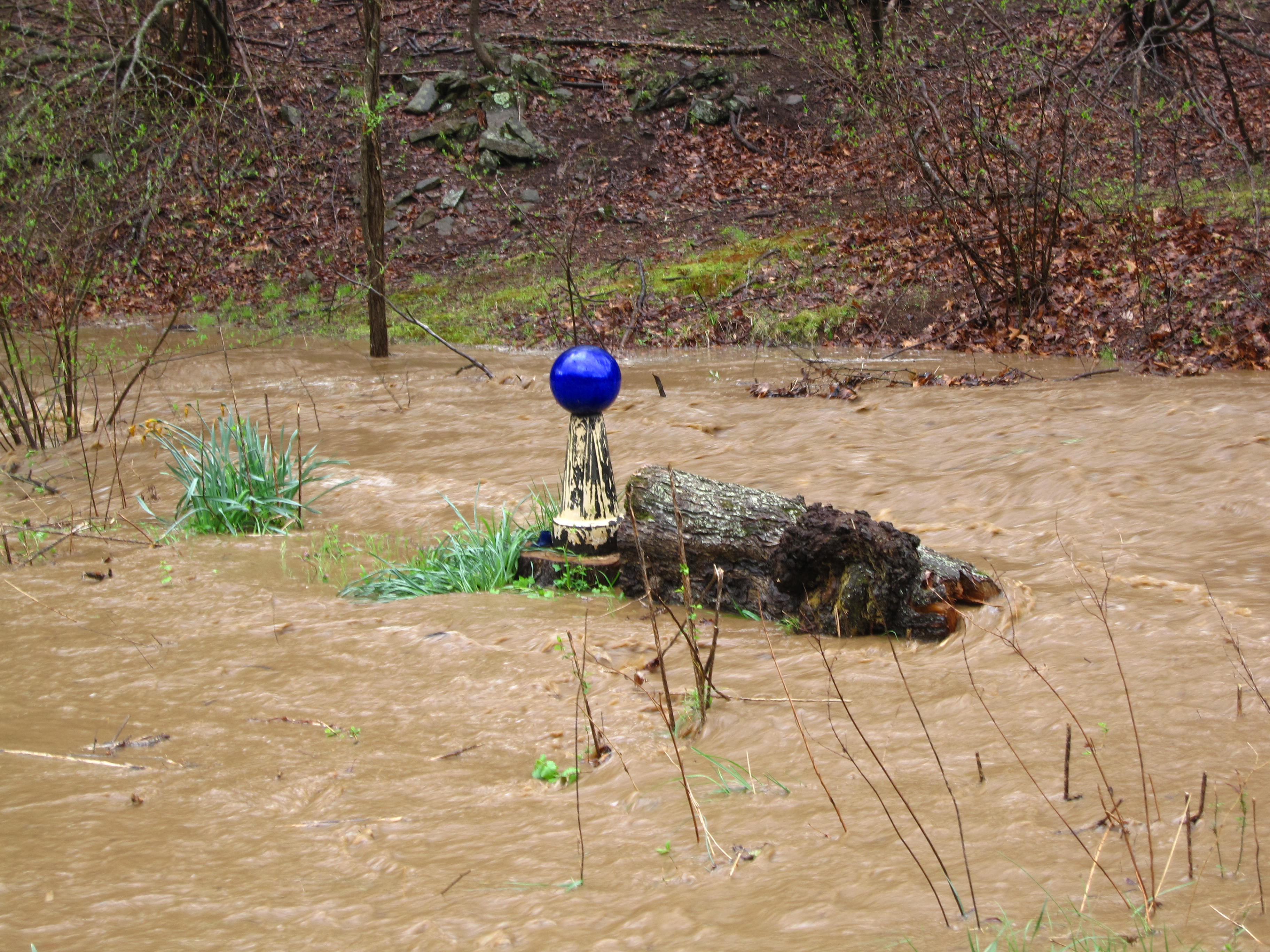
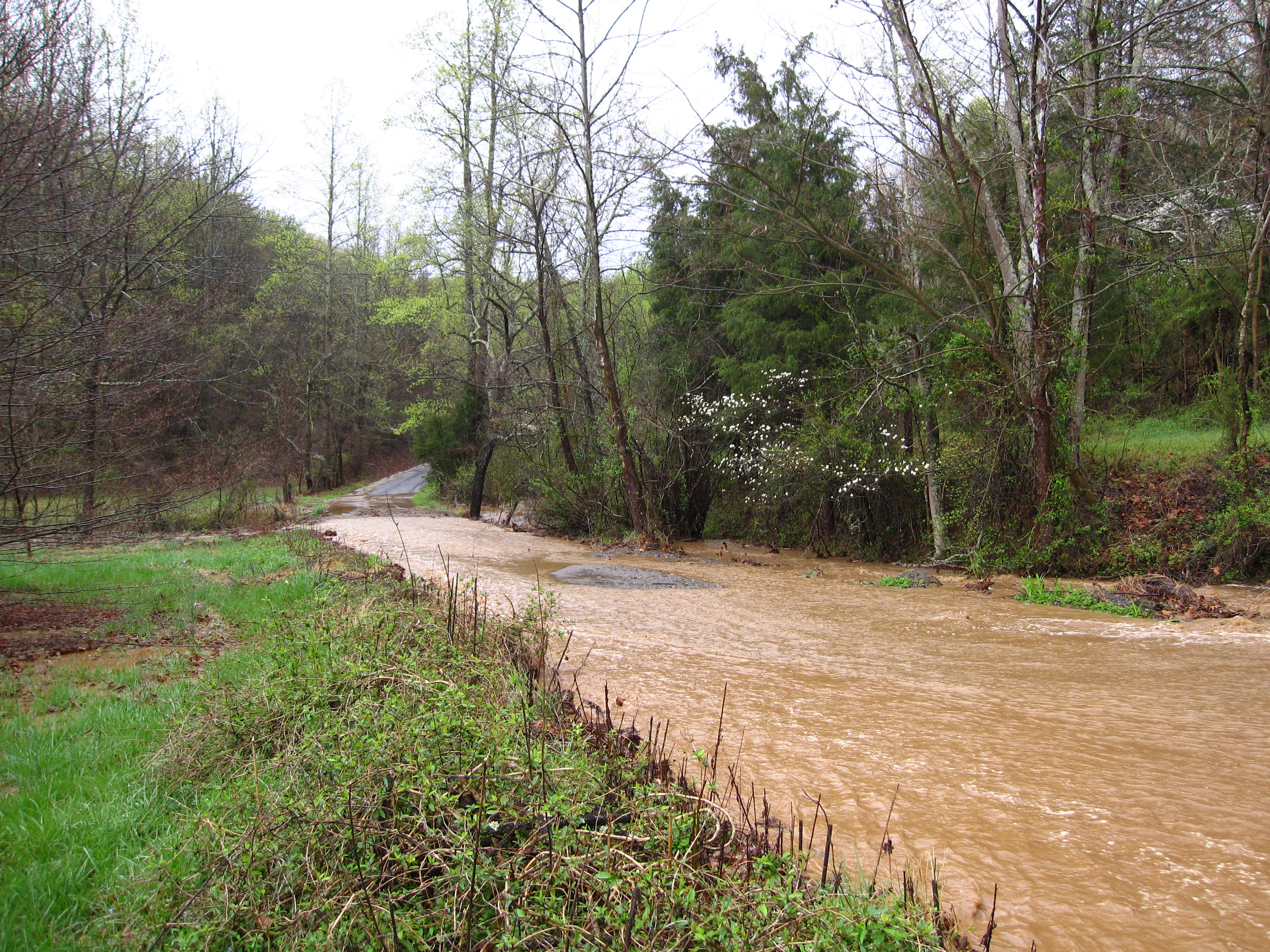
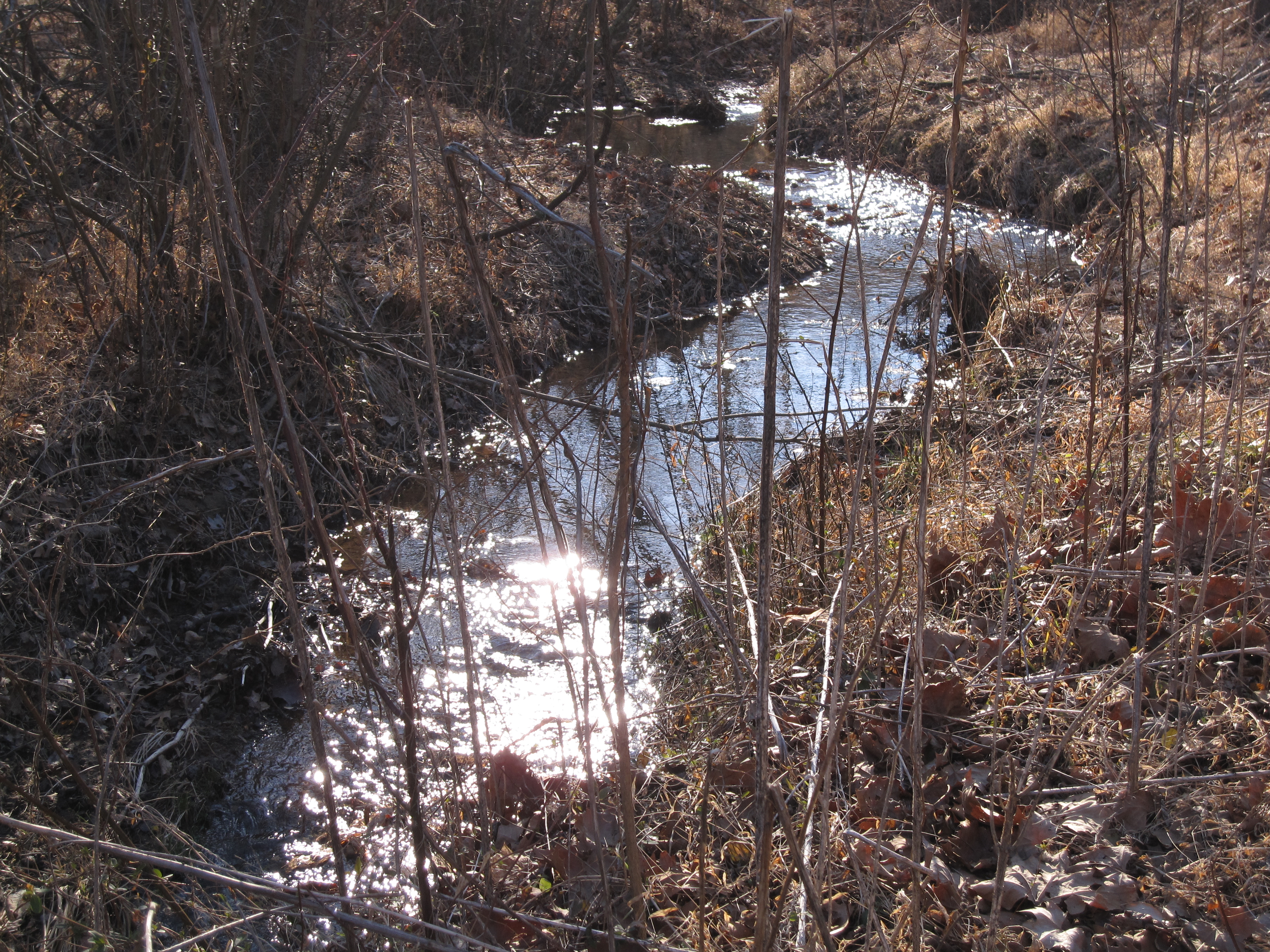
The force of nature is irresistible. We were very gently reminded of this down here in the hollow when our creek overflowed its banks in April. We could feel the heavy rain cell sitting on top of us as it let go its flood. Luck was with us and the downpour was brief. Because our little creek is fed only by a few springs and the run-off from the road, it all receded almost as quickly as it came.
Periodically some neighbors want to pave the road that runs through the hollow so their cars don’t get dusty and they don’t have to slow down over the wash-boards in the old gravel. A hard surface down here would shoot water into the creek with a terrible velocity, eroding the banks and washing oil and other pollutants very efficiently into the water and it would be one more country road gone forever.
As long as we’re here, we’ll give the creek its room and cross our fingers.
There are worse chances to take for lesser causes.
Ever since the Environmental Protection Agency has started taking steps to enforce a clean-up of the Chesapeake Bay, industrial agricultural has been fighting back.
According to the April issue of the Chesapeake Bay Journal www.bayjournal.com, the American Farm Bureau Federation is suing to block the EPA from requiring states to set limits on the maximum amount of nitrogen, phosphorus and sediment that run into the Bay from their tributaries. This is a problem?
Apologists for old-time industrial agriculture like Carl Shaffer, president of the Pennsylvania Farm Bureau, hide behind states rights to argue that “there is a gun being held to” the states’ heads “until they come up with a plan that the EPA feels is desirable.” Virginia Rep. Bob Goodlatte defends the rights of cattle feedlots to be free from federal regulation by the Clean Water Act.
Dave White, chief of the USDA Natural Resources Conservation Service (talk about the fox guarding the henhouse!), before a U.S. House Committee hearing last March, actually praised the success of voluntary conservation programs which over generations have left the Bay a sewer.
Agriculture is the largest source of nutrient pollution feeding the dead zones in the Bay. Left to their own devices, there is no incentive for ignorant old farmers and money-hungry corporations – or money-hungry farmers and ignorant old corporations – to stop dumping cheap petroleum fertilizer and pesticides into our common watershed. If not this, what is the federal government for? Endless war?
Fight the power. Stop the polluters. They don’t have the right. Our watershed and the Bay should be protected for the people as a whole, not sold out to the ag. industry and developers.
In far western Albemarle County, Virginia, I’m writing and emailing Rep. Robert Hurt (hurt.house.gov)and Senators Webb (webb.senate.gov) and Warner (warner.senate.gov) to let them know where I stand.
Beech watch continues:
In honor of Earth Day, excerpts from –
RIBBLESDALE
by Gerard Manley Hopkins
Earth, sweet Earth, sweet landscape, with leav`es throng
And louch`ed low grass, heaven that doest appeal
To, with no tongue to plead, no heart to feel;
. . .
And what is Earth’s eye, tongue, or heart else, where
Else, but in dear and dogged Man? – Ah, the heir
To his own self bent so bound, so tied to his turn,
To thriftless reave both our rich round world bare
and none reck of world after, this bids wear
Earth brows of such care, care and dear concern.
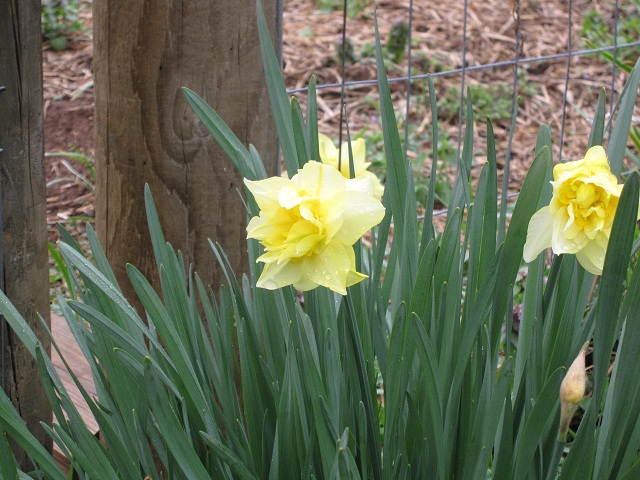
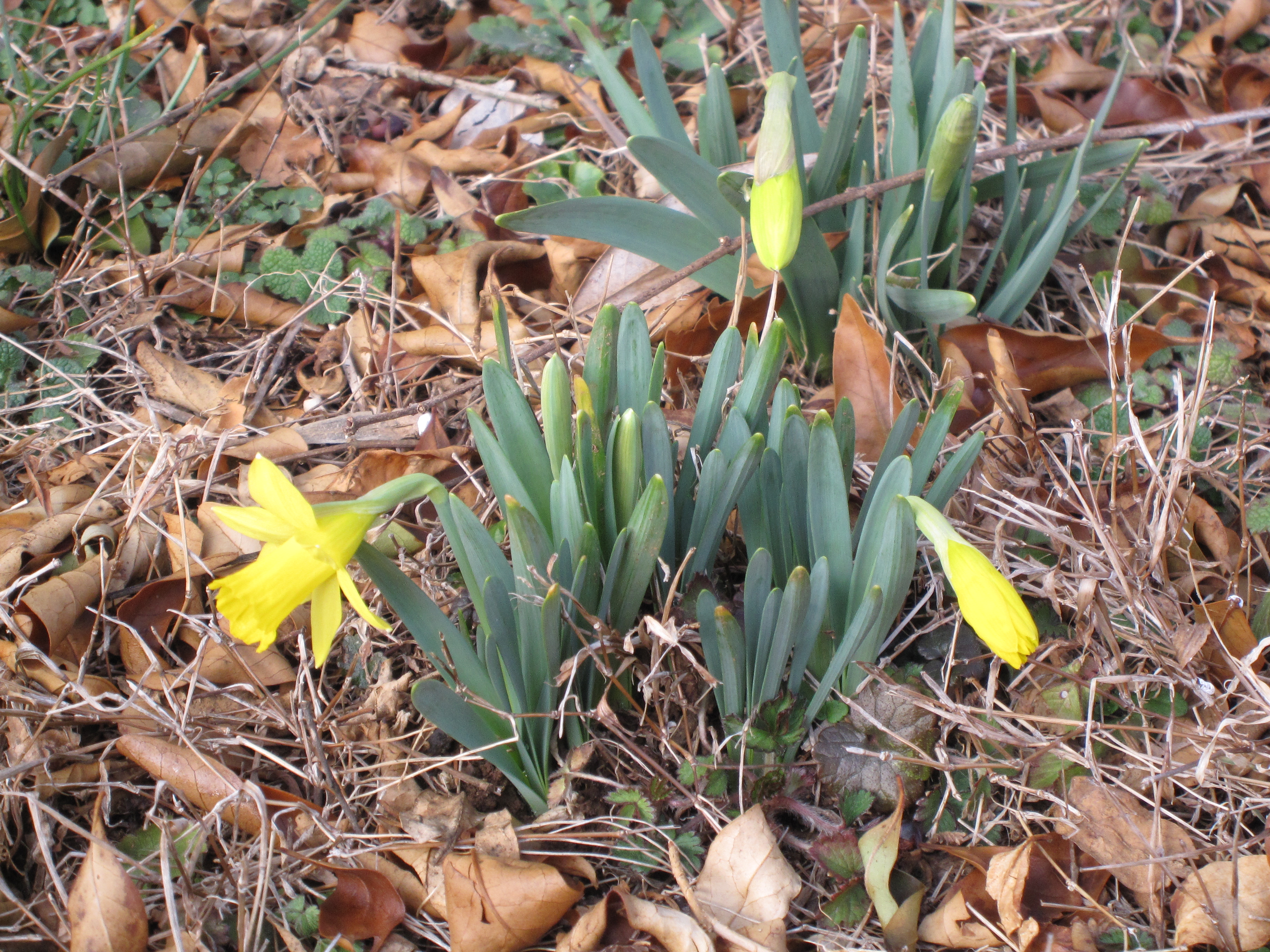
The early daffodils are gone – no more bright yellow ‘Tete-a-Tetes’ or sturdy ‘Little Beauties’. Mid-season ‘Thalias’ (pure white and musky) and miniature ‘Segovias’ are in full bloom and the old double ‘Butter and Eggs’ is opening. ‘Twin Sisters’, the last daffodil to bloom here in the hollow, hasn’t made her appearance yet, so we still have a few more weeks of daffodil season.
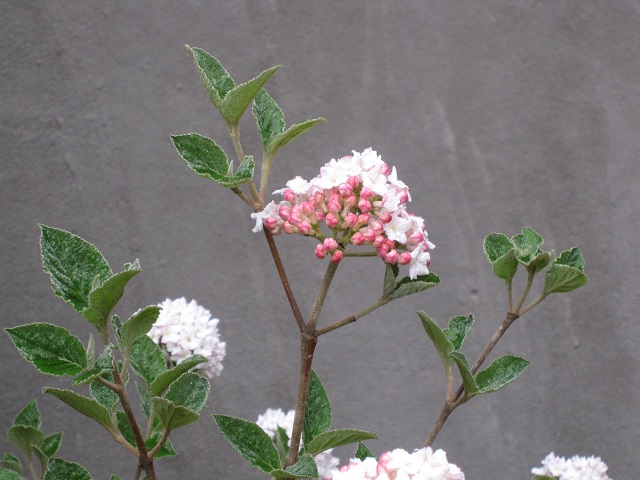
Koreanspice viburnums (V. carlesii ) are in bright pink bud. Although viburnums are supposed to be deer resistant, our little herd browses the one outside my window, nibbling the lower branches and sometimes the blossoms, each spring.
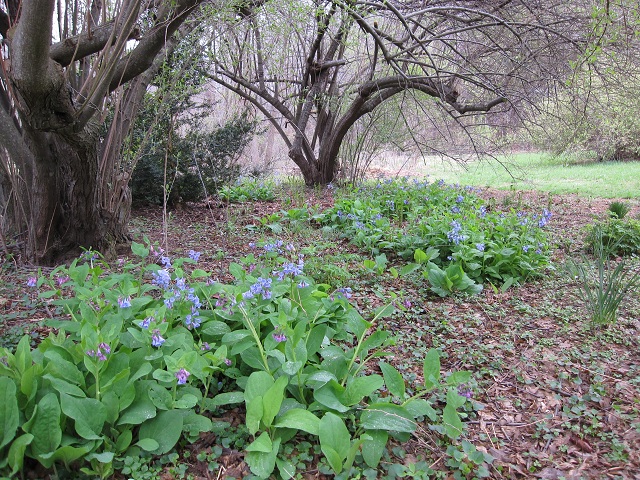
Virginia bluebells drift away under the autumn olives in the marshy area by the creek. The deer never bother them. Ostrich fern, also deer resistant, follows.
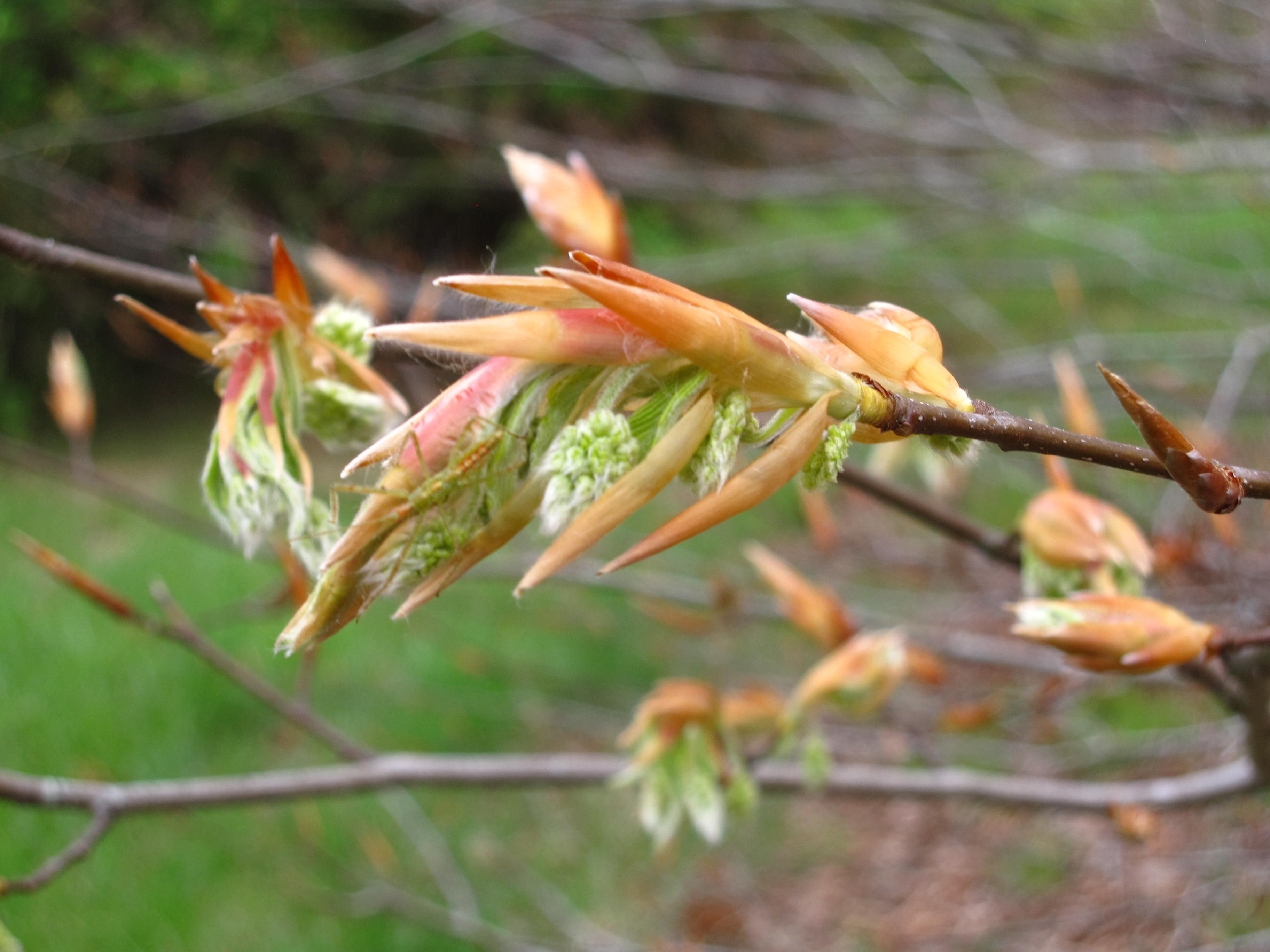
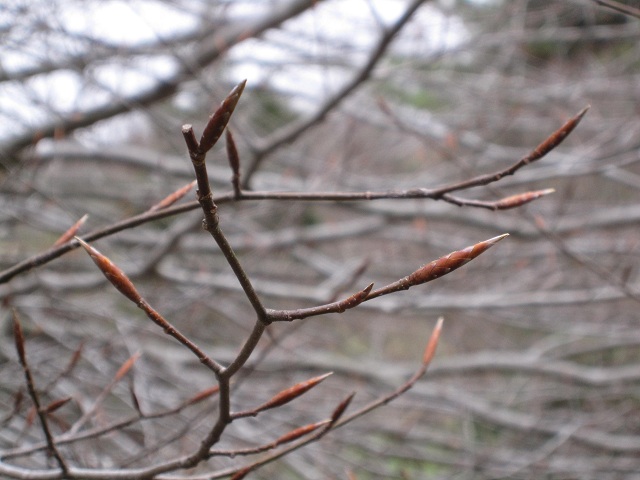
And the beech buds begin to swell.
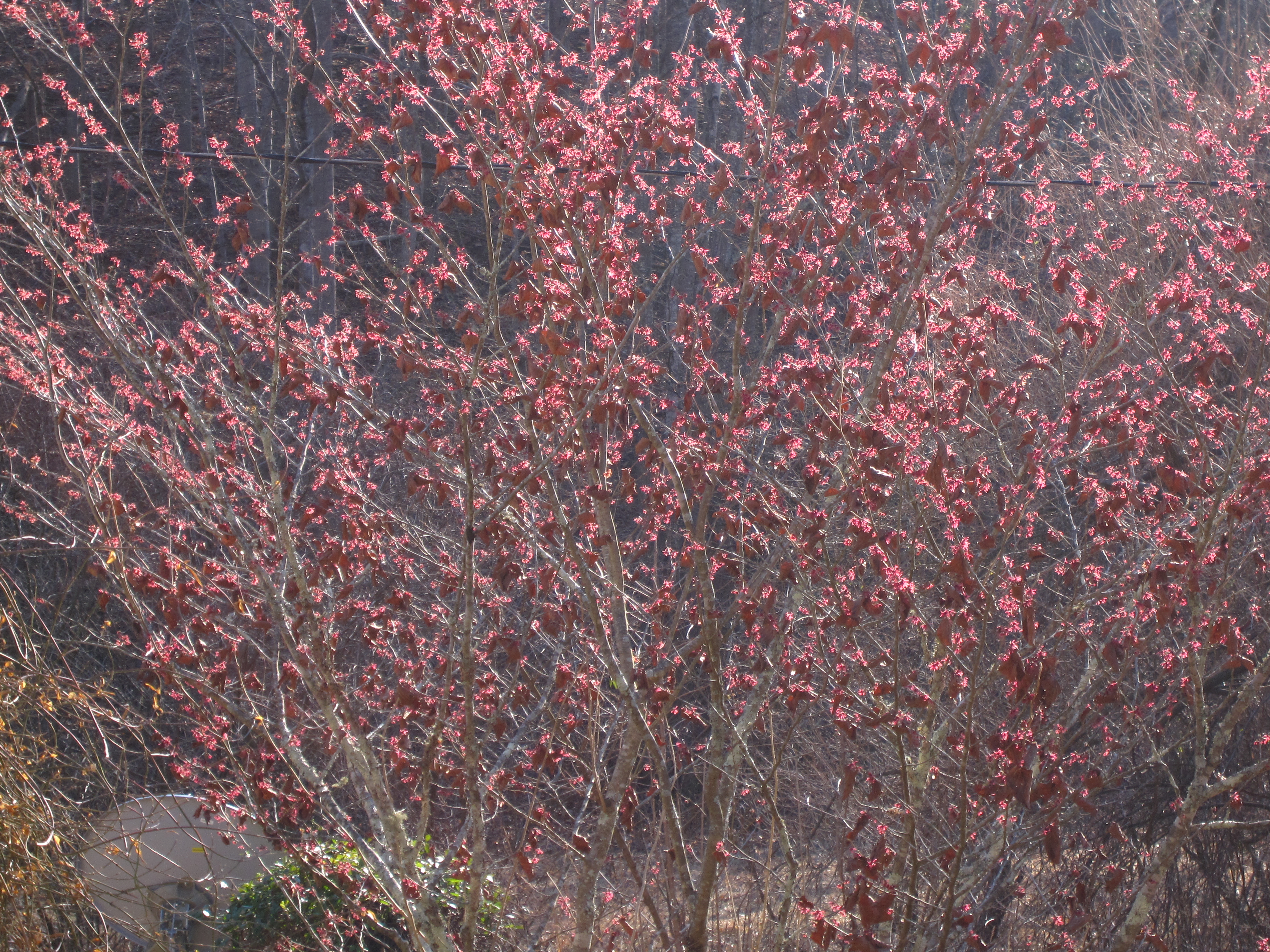
The first narcissus to bloom this year is ‘Little Gem’, a miniature trumpet daffodil. Species crocus are beginning to flower – royal purple ‘Ruby Giant’ and ‘Cloth of Gold’. The witchhazel ‘Diane’ continues to shimmer in pink and the first fruit-loopy scent of Lonicera fragrantissima is on the air.
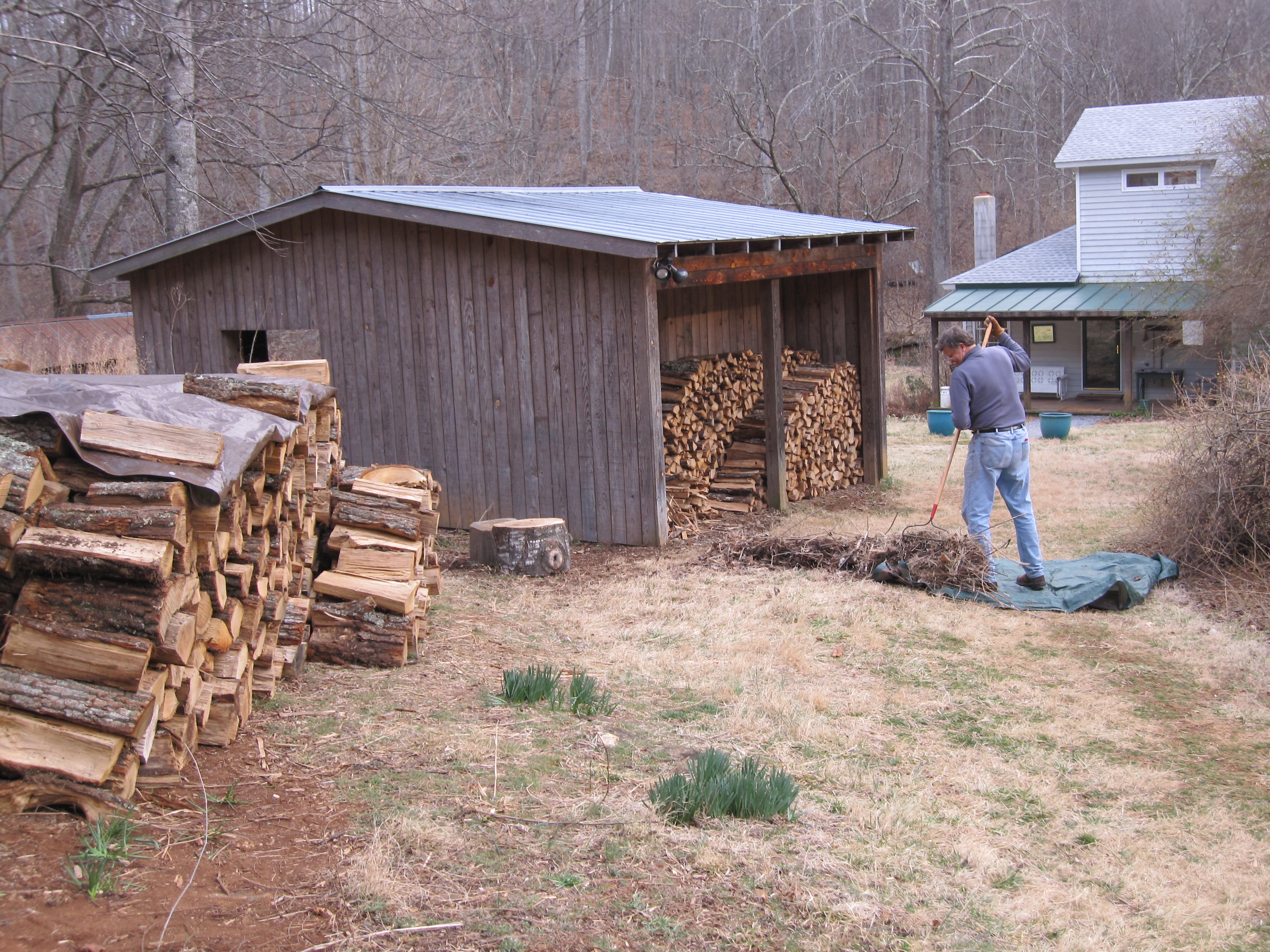
John has finished stacking the huge double load of wood that was snaking along the drive, wheelbarrowing it up to the shed, uncovering more miniature daffodils, little Tete-a-Tetes that had been covered when the wood was dumped.
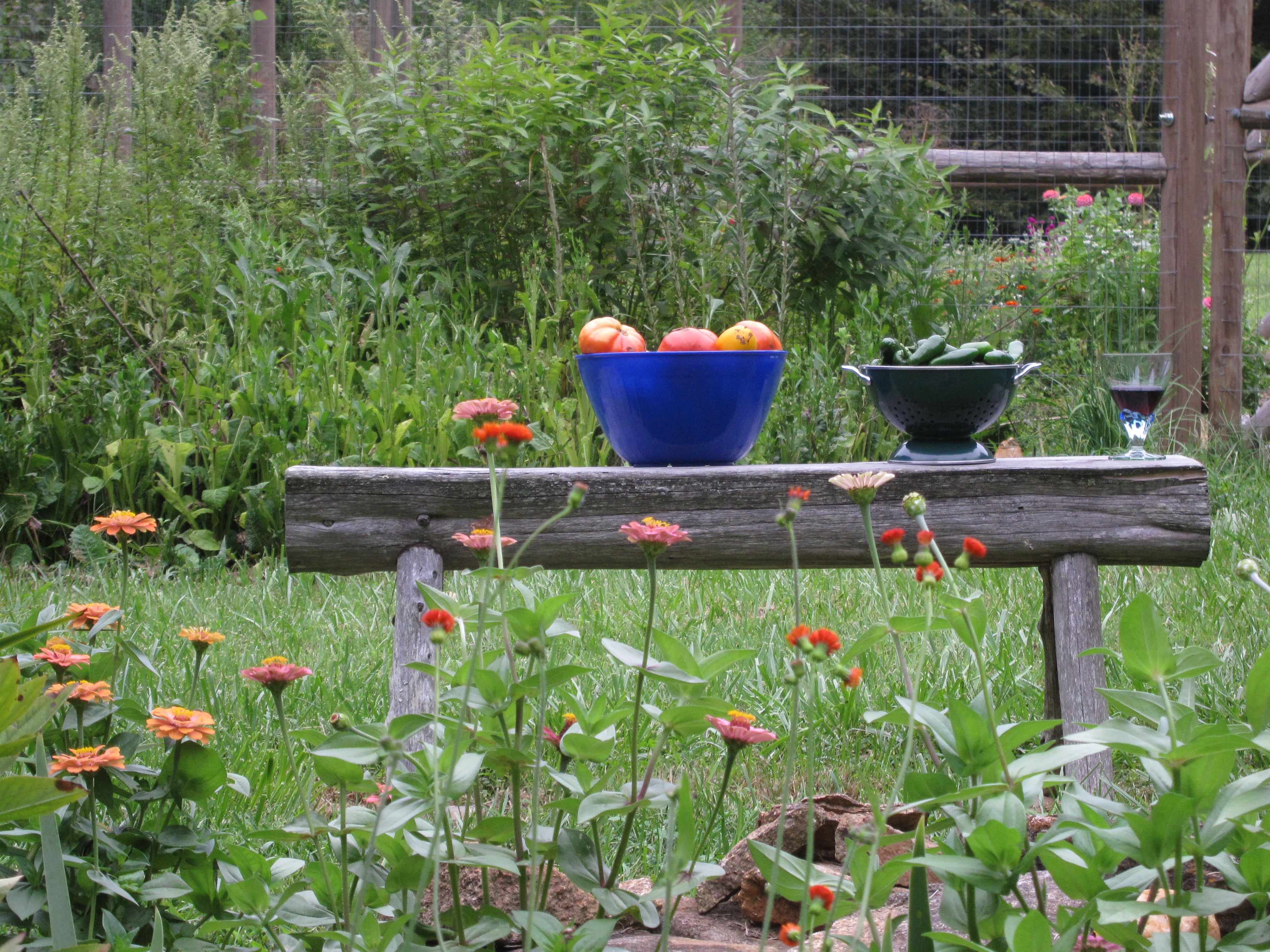
We transplanted some bulbs to spill down from the new bench – an ancient piece of slate on top of a couple of balustrades from an old arena torn down years ago at the University. Already it looks like it’s been there forever.
Looks like the captive groundhog up there in Puxatawney was right after all. Ever since they pulled the thematic rodent into his special day, it’s been spring down here in the hollow.
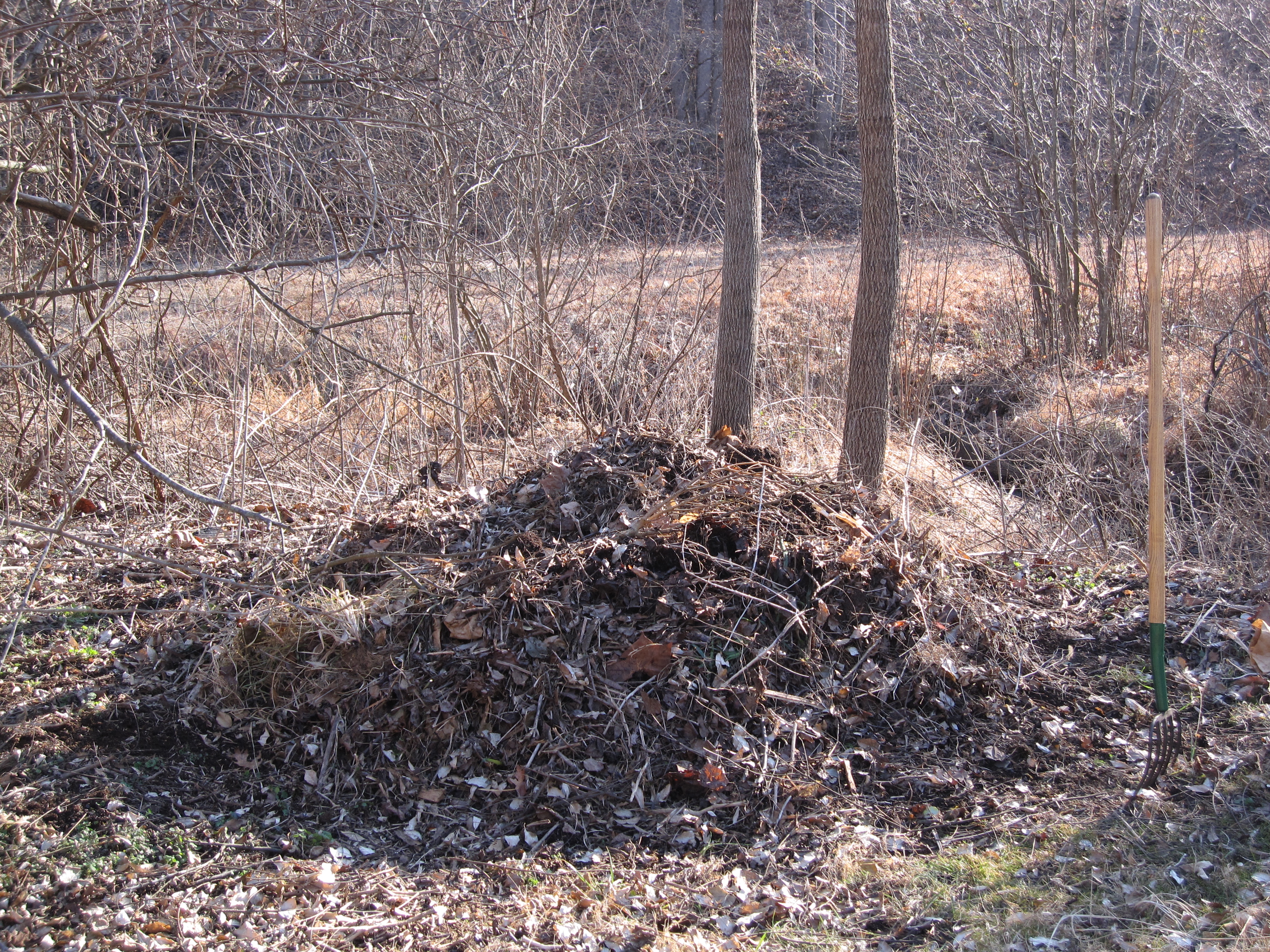
Windy and dry, we’re starting off with a rain deficit of several inches here in Albemarle County. Definitely not a good time to burn the woodpile, but it’s good weather for turning over the compost. Eliot Coleman has inspired me and the plan is to spread out what I can get from the bottom of my poor man’s pile (i.e., not layered according to carbon-nitrogen ratios, just rotted kitchen scraps and garden debris ) before I sow early greens, peas, carrots and onions in March.
Witchhazel ‘Diane’ is blooming her heart out
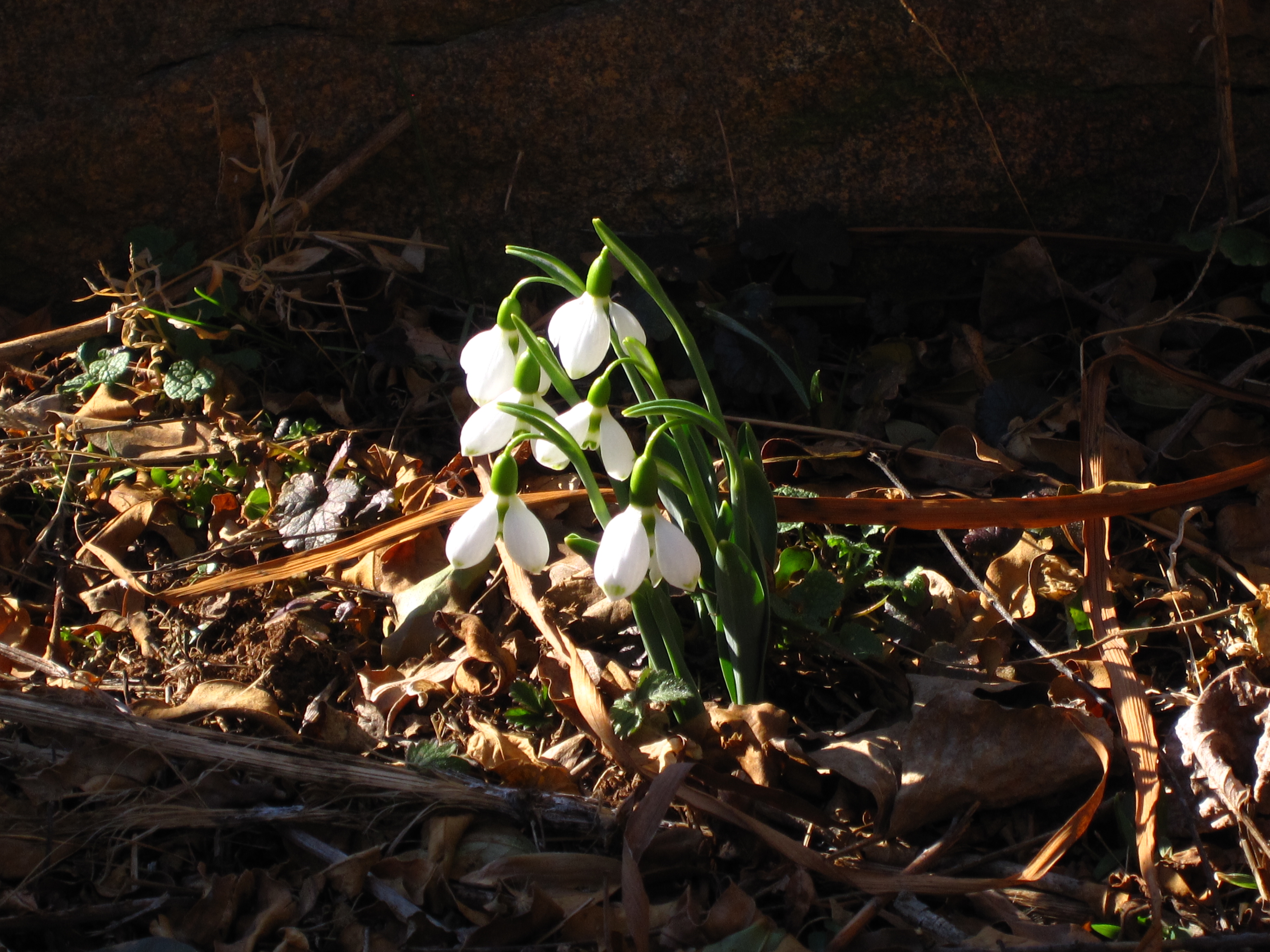
and the snowdrops are in bloom.
Close enough to spring for me.
February is the month for garden seminars and I attended two last week that were top notch.
Douglas Tallamy, Prof. of Entomology and Wildlife Ecology at the U. of Delaware, spoke at the venerable Piedmont Landscape Assn.’s annual gathering in Charlottesville. He blew away the 650+ audience (ensconced in the splendor of the ornate Paramount Theatre) with his message of conserving the insect-bird-mammal chain that sustains us all. Spontaneous standing O at 10:30 in the morning.
Bottom line: plant oaks. At the top of his list, they sustain 534 different kinds of butterfly larvae. His beautiful photos of caterpillars alone were worth the price of admission.
I am avidly looking for his Bringing Nature Home (2007) which my friend, Hans, who tends the presidential gardens at RIT, says changed his life.
Three days later I encountered Eliot Coleman at UVA. Spritely author of Four Season Harvest and spouse of garden writer Barbara Damrosch, he spoke to a rapt audience of students and local gardener/foodies who soaked up his message of sustainable use of the land.
There is a yearning out there for making peace with this world.
Let us all blunder on.
Even though we live on a gravel road in the country, I still worry sometimes about what people think as they drive by. There’s the old cedar post fence we’ve been dismantling over the past couple of years, which is turning into a nice jumble of honeysuckle, mugwort and bittersweet, and the big pile of firewood dumped in a snaky line by the drive (we ordered double this fall after a mid-blizzard delivery of green wood last season).
And then there’s Milo’s play toys.
A Jack Russell terrier who came to us from a scrabble city lot 10 years ago with a plastic neck cone and a cast on his back leg, he rules his domain here in the hollow. If karma has any meaning, he is the reincarnation of someone who deserved a really, really good life on the next plateau.
He needs no store bought toys – a plastic cone filled with peanut butter, squeaky fluff balls or other such degenerate stuff. An empty plastic soda bottle (green Seagram’s ginger ale preferred) or red coffee jug does him just fine and he’s a delight to see scampering about, piercing them with his teeth, tossing them in the air and turning on a dime to re-attack. I think Milo is God’s play toy.
It’s all recycling to me, but might look like trash to someone passing.
We can look and yet not understand what we see. But when I see Milo I know I’m looking at sheer perfection.